The Tailor of Gloucester
A tailor in Gloucester is making the mayor's waistcoat for Christmas morning. He falls ill before he can finish — he has run out of cherry-coloured twist. While he sleeps, the mice in his shop, who he had once rescued from his cat, take up the needles and finish the work. All but one buttonhole. They have run out of thread.
The story is true. Beatrix heard it from her cousin Caroline Hutton during a visit to Gloucestershire. The real tailor, Mr. Prichard, was at his wits' end one Saturday with a special waistcoat half-finished. His two assistants slipped in with skeleton keys, finished it overnight, and pinned a note that said "no more twist." The tailor never knew. Beatrix changed the assistants into mice — and kept everything else.
The book was Beatrix's own favourite. She had written it by hand at Christmas 1901 as a present for Freda Moore, a small girl who had been ill — "Because you are fond of fairy-tales and have been ill, I have made you a story all for yourself." The trade edition, two years later, kept every rhyme and old word she had woven in.
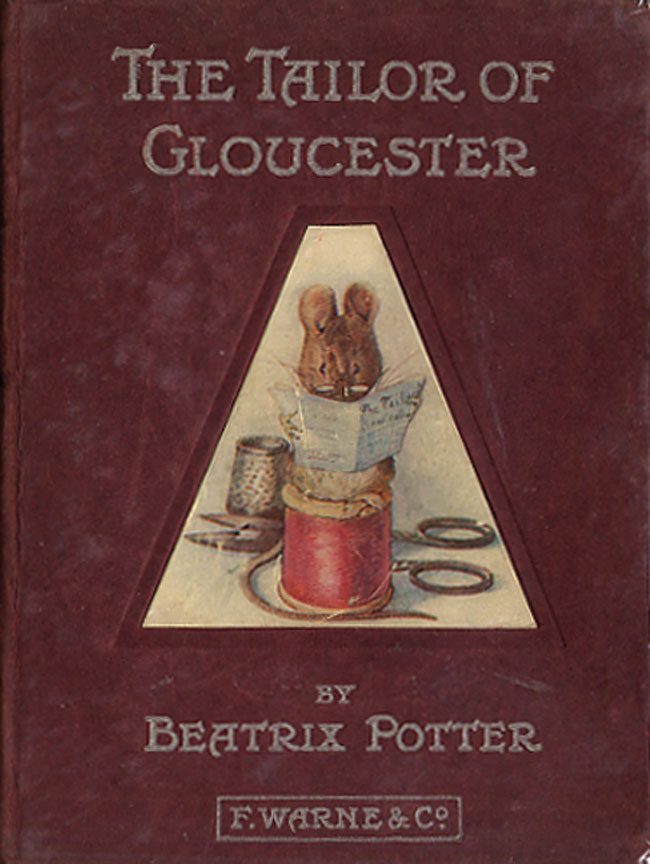
The cover shown is the original edition. Amazon carries the copies in print today.
Buy on Amazon→❦ Everything else in the Sanctuary is free, and this is the shelf that keeps it so. Bea's Corner is an Amazon Associate — buy through these links and a little comes back to us, at no extra cost to you. With thanks for keeping the doors open.
Particulars
- First privately printed
- October 1902, 500 copies (with coloured illustrations throughout)
- Trade edition
- October 1903, Frederick Warne & Co.
- Setting
- Gloucester (the streets), Harescombe Grange (interiors), Chelsea (the tailor's shop)
- Original manuscript
- Christmas 1901, gift to Freda Moore — twelve watercolours in a stiff-covered exercise book
- Position
- Beatrix's own favourite of all her books
Curiosities
- ❦Beatrix sat on a Gloucester doorstep in "the hot, summer sunshine" — sketching a snow-scene for the book.
- ❦To research a tailor's workshop, she walked into a Chelsea tailor's shop and pulled a button off her own coat. While the tailor sewed it back on, she studied his tools and rooms.
- ❦The tailor's shop in the book was copied from a print of houses in old London city.
- ❦The end of Freda's manuscript has Beatrix's own glossary of old words — padusoy (silk of Padua), lutestring (lustred silk), Robins (old-fashioned for "trimmings").
- ❦The story turns on an old country tradition: "all the beasts can talk in the night between Christmas Eve and Christmas Day in the morning."
From the same shelf
Your Sanctuary Collection
Your collection is currently empty.