
It began with a tiny bottle and a ridiculous name: 'Quintessence of Abyssinian Artichokes.' In 1903, during a year of extraordinary creative energy, Beatrix Potter penned the "woeful tale" of Tuppenny—a guinea pig with sparse hair who became the subject of a barber’s experimental tonic.
Though written during the peak of her popularity, this story remained a hidden gem for decades. Beatrix eventually recast Tuppenny’s misadventures as the opening chapter of her longer work, The Fairy Caravan (1929). It wasn't until 1973 that the story finally stood alone as a "Little Book," thanks to the discovery of her original 1903 manuscript and a fresh set of illustrations by Marie Angel.
The Cost of a Cure
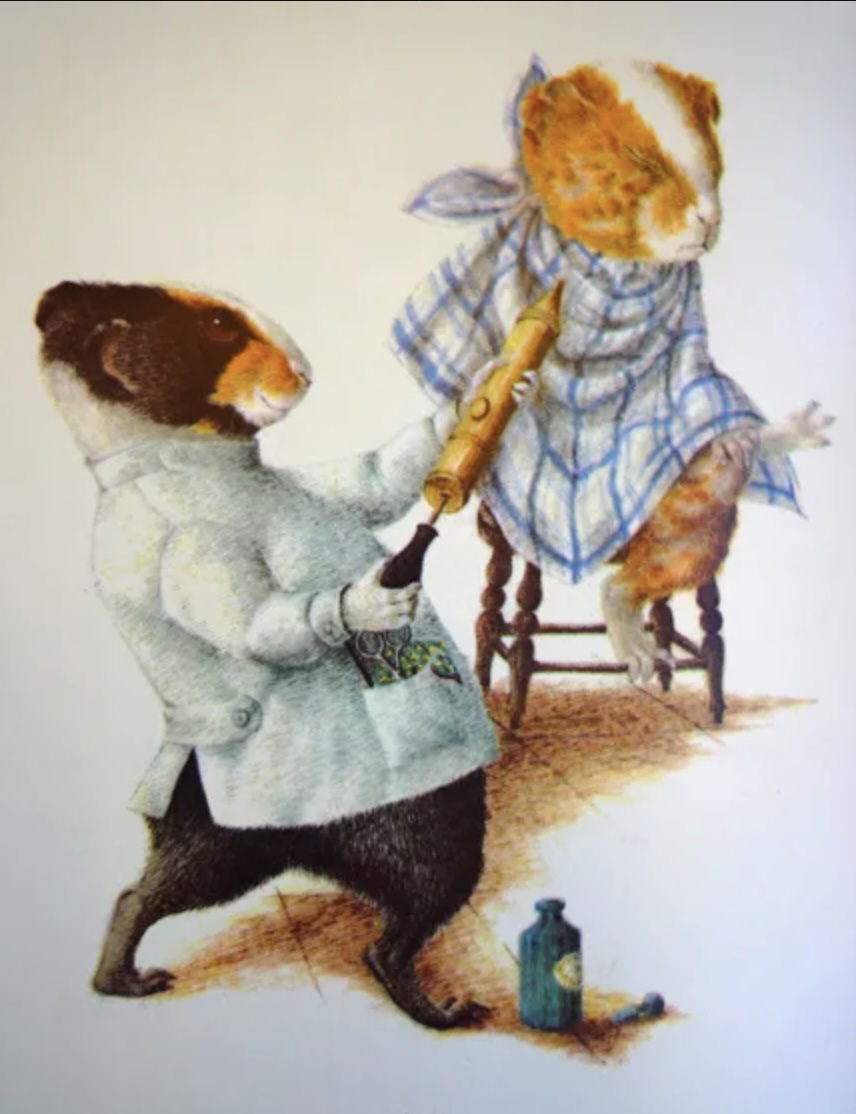
Tuppenny is a quiet soul whose only real problem is a lack of hair. But when he is treated with the 'Quintessence of Abyssinian Artichokes,' the results are far more successful than anyone anticipated. His hair doesn't just grow; it erupts.
Soon, Tuppenny is a "walking mountain of fur," so lost in his own coat that he can barely find his way. In a turn that is both absurd and a bit gritty, he finds himself a spectacle in a traveling show, valued only for the absurd length of his hair. It is one of Potter’s most grounded looks at how one small mistake—a "cure" that goes too far—can change a life forever.
The Precision of the Miniature
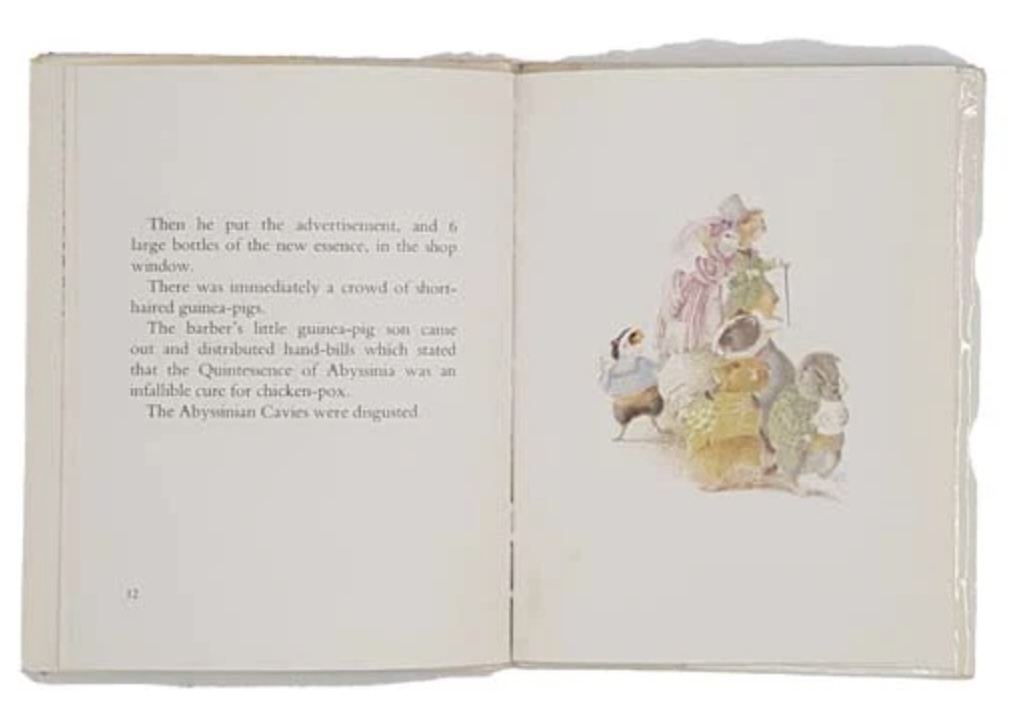
Because the original manuscript lacked finished watercolors, the 1973 edition features illustrations by Marie Angel. Angel, a master of miniature art, brought a jewel-toned precision to the story that Beatrix herself would have admired.
Her drawings capture the sheer absurdity of Tuppenny’s situation without losing the "hidden vitality" of his character. We see him not just as a hairy curiosity, but as a small creature trying to maintain his presence in a world that has turned him into a showpiece. It is a perfect visual match for a story that Potter wrote when her own powers of observation were at their sharpest.
The Warmth of the Strange
This book has a feeling all its own. It moves between the 'woeful' trouble Tuppenny finds himself in and the warm, safe world Beatrix built. It's a story about how life can sometimes get messy, and how we find our way back to a quiet, happy place. It gives us a moment to think about our own strength, wrapped in the quirky details of a 1903 secret.
📂 The Archivist’s Drawer
Hidden details for the collector and the historian.
- The 70-Year Wait: While the story was written in 1903 (the same year as Squirrel Nutkin), it was deemed "too strange" for a standalone volume until the archive was revisited in 1973.
- The Caravan Connection: If you read the first chapter of The Fairy Caravan, you will find the same text. Beatrix loved the character of Tuppenny so much she used him to launch her longer, American-curated collection.
- The Real Tuppenny: Beatrix kept guinea pigs as pets and found them "uncommonly difficult" to draw because of their lack of clear shape. This story was her attempt to master their "formless" forms.
- Marie Angel’s Miniature Art: The illustrator chosen for the 1973 edition, Marie Angel, was also a specialist in calligraphy. Her precise, "botanical" approach to the guinea pig's fur is a direct homage to Beatrix's own scientific background.
- The Satire of Vanity: The "Abyssinian Artichokes" is a pointed satire of the Edwardian obsession with miracle tonics and scientific "cures" that often caused more harm than good.
Finding the Edition
- The Reading Copy: Seek out the 1973 Marie Angel illustrated edition. Her vibrant, detailed art perfectly frames the strange journey of our guinea pig friend.
- A Rare Find: Look for copies with the Leslie Linder foreword. Much like The Sly Old Cat, this book is a testament to the archival work that rescued these stories from total silence.
Let the absurd misfortune of Tuppenny and the magic of the fairy circus bring a touch of the fells to your library tonight.
Leave a Visiting Card
Consulting the visiting cards...