Imagine a "well-behaved" black cat sitting by the fire, the very picture of domestic peace. For her owner, she is simply "Kitty," a pampered pet. But for Beatrix Potter, writing in the early days of 1914, there was always a wilder world hidden just beneath the surface. She knew that even the most "prim" kitty might lead a clandestine double life once the sun went down.
This was the spark for The Tale of Kitty-in-Boots—a story that was finished and ready for the world when history intervened. For a century, the manuscript sat in a quiet drawer, a victim of what Beatrix called the "interruptions" of the First World War, her own father’s terminal illness, and her shift into her new life as a farmer’s wife. It wasn't until 2014 that the manuscript was pulled from the archives of the V&A Museum, marking one of the most significant literary rediscoveries of the century.
The Double Life of Catherine St. Quintin
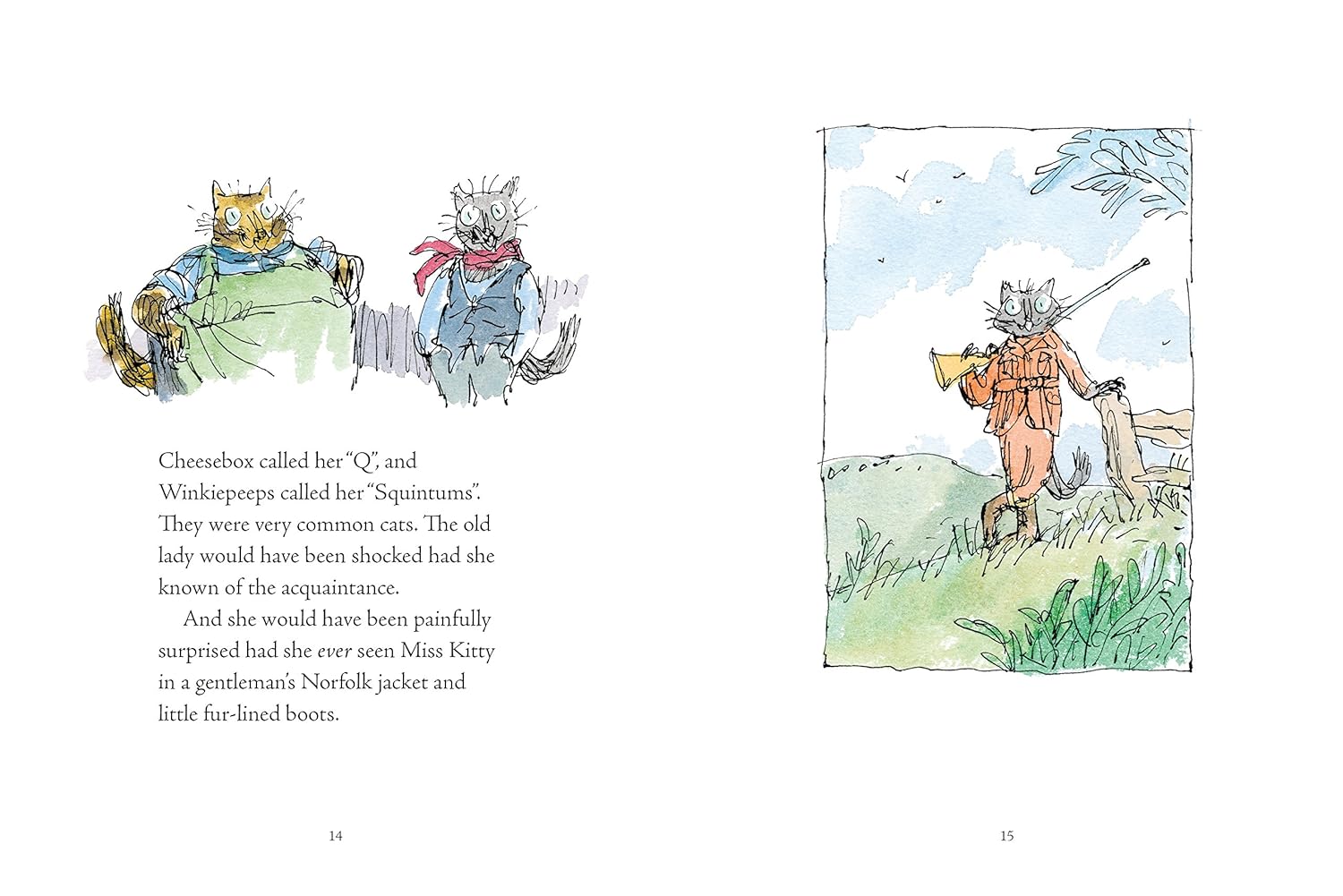
The story centers on a cat who prefers the high-flown name of Miss Catherine St. Quintin. To facilitate her night-time hunting expeditions, Kitty employs a clever strategy of substitution: she persuades another black cat, Winkiepeeps, to take her place in her wash-house bed while she slips away into the moonlight.
Dressed in a "gentleman’s Norfolk jacket" and "little fur-lined boots," and armed with an air-gun she borrows from a friend, Kitty ventures into the woods behind Sawrey. It is a brilliant study of the tension between a domestic facade and a hidden, predatory heart. Beatrix, ever the observer, famously remarked that she did not consider cats "thoroughly domesticated animals," and in this book, she lets that wildness run free.
The Sawrey Night-World
In Kitty-in-Boots, Beatrix takes us into a world of "surreal" darkness, far removed from the tidy gardens of Peter Rabbit's youth. The setting is identifiable as the woods and lanes near Hill Top Farm, a landscape that Beatrix was beginning to see through the eyes of a farmer rather than a London visitor.
The story is a tactical thriller of the undergrowth. Kitty, attempting to poach rabbits, becomes entangled with a cast of "colorful villains," including the white ferret Slimmy Jimmy and the fox **Mr. Tod**. The stakes are high; unlike her earlier, whimiscal tales, the ending is physicalized by loss. Kitty is eventually rescued from a trap, but at the cost of a toe, leaving her with an "elegant limp"—a permanent reminder that rebellion in the wild has a price.
The Return of an Aggressive Peter Rabbit
For many readers, the most shocking "tidbit" is the cameo of an older Peter Rabbit. This is not the frightened boy who lost his shoes; he is now a "stout," aggressive, and bad-tempered adult. In a moment of high drama, he emerges from a burrow to prod the villainous ferrets "violently and painfully" with an umbrella. It is a fascinating character evolution that proves Beatrix’s world grew and aged right alongside her.
The Grit of the Night Woods
This story has a sharp, steadying feel that is different from her forest tales. It knows that the natural world has its own rules—and it doesn't flinch when Kitty finds them. It’s a tale for those who like their reading with a bit of a bite, a reminder that a black cat in the moonlight is never quite as domestic as she seems by the fire.
The Vitality of the Line
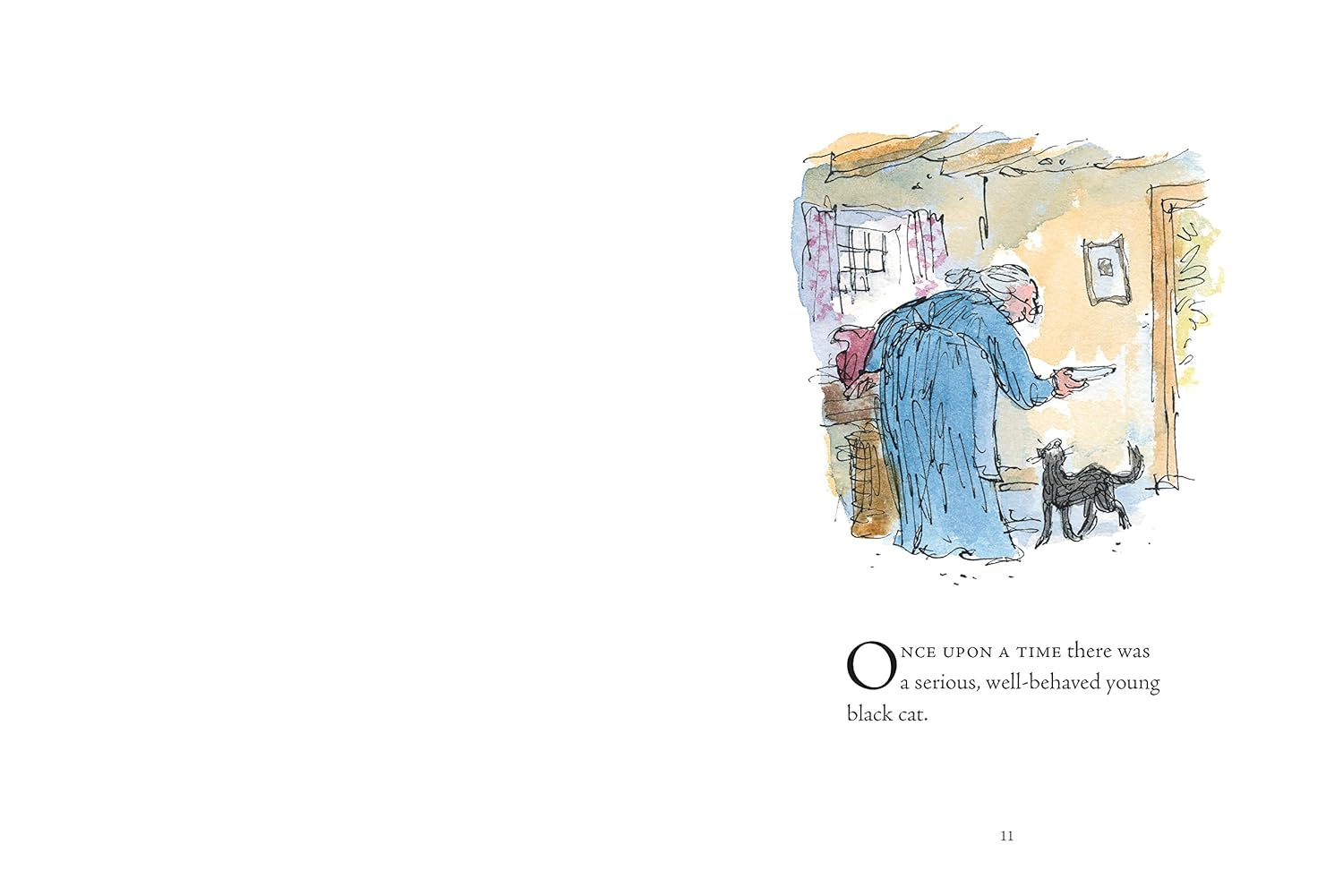
Because Beatrix had only completed one finished watercolor before putting the book aside, the 2016 edition features illustrations by Sir Quentin Blake. For many readers, Blake is a living legend of British illustration, best known for the energetic, "scratchy" drawings that brought Roald Dahl’s stories to life.
His style is a sharp departure from Potter’s microscopic precision; whereas Beatrix used layers of fine watercolor, Blake uses quick, "rebellious" ink lines that feel like they are moving across the page. The publisher chose him because they felt his sense of "mischief" perfectly matched the sharp, satirical tone of Beatrix’s 1914 text. In a touching tribute, Blake even modeled the character of Kitty’s owner to resemble a real-life Beatrix Potter.
The Living Voice
Before you open the archive, listen to an extract of the tale read by Dame Helen Mirren. Her sharp, unblinking delivery perfectly matches the grit of the 1914 prose.
📂 The Archivist’s Drawer
For the collector and the curious, here are the hidden details behind the 100-year silence.
- The V&A Discovery: The manuscript was rediscovered in 2014 by Jo Hanks, a publisher who followed a trail from a 1970s literary history book. She found three handwritten notebooks and a typeset "dummy" book tucked away in the V&A archives.
- The Landscape-First Approach: Archival sketches show that Beatrix painted the "mossy tumble-down walls" of Sawrey first, only adding the characters later. The landscape wasn't just a backdrop; it was the foundation of the story.
- The £10,000 Sketch: Such is the legacy of this "lost" work that original Quentin Blake illustrations for the book have sold at auction for as much as £10,000.
- The "Sportsman" Disguise: Kitty’s choice of the Norfolk jacket was so convincing that she was mistaken for a "gentleman sportsman" by other animals in the woods.
- A Grand Format: Unlike the original "Little Books" (which Beatrix designed small for small hands), the 2016 edition was released in a larger format to accommodate the sweeping, gestural art of Quentin Blake.
Finding the Edition
- The Anniversary Edition: Seek out the 2016 Frederick Warne first edition. It marks the 150th anniversary of Beatrix's birth and stands as a bridge between the archival past and the literary present.
- The Audio Experience: Look for the version narrated by Dame Helen Mirren. Her unblinking, sophisticated delivery perfectly matches the dry, satirical tone of the 1914 prose.
Let the elegant limp of Miss Catherine and the moonlight over Sawrey bring a touch of the wild to your library tonight.
Leave a Visiting Card
Consulting the visiting cards...