

Behind the closed doors of a London study in 1907, Beatrix Potter was navigating a silent, complex landscape of grief. While the rest of the world saw only the commercial success of her "Little White Books," Beatrix was quietly holding onto a private, handwritten manuscript—a gift for the family of the fiancé she had lost just two years before.
It was for the Warne children—the nieces and nephews of Norman Warne—that Beatrix first penned The Tale of the Faithful_Dove. It wasn't born from a commercial pitch; it was a private act of devotion, inspired by a true story of a trapped bird she had watched during a visit to the coast.
But for fifty years, this story stayed behind a locked desk. Beatrix possessed what she called a "scientist’s eye"—she could document the microscopic gills of a fungus with perfect clarity—but she was famously hard on herself when it came to birds. She called her pigeon characters "rather namby pamby" and feared her technical skill couldn't capture the "soul" of their flight. Because she felt the art wasn't good enough, she tucked the manuscript away and chose to keep it secret.
A World Above the Streets
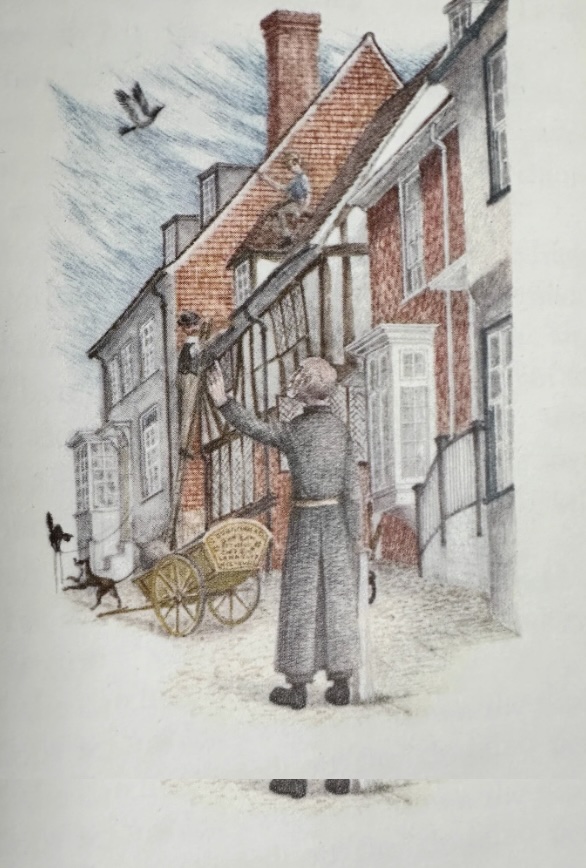
In this book, Beatrix leaves behind the garden gates and takes us to the ancient, vertical world of Rye in East Sussex. This is a place of church towers, sea mists, and the high, red roofs she sketched during those long, reflective afternoons in 1907.
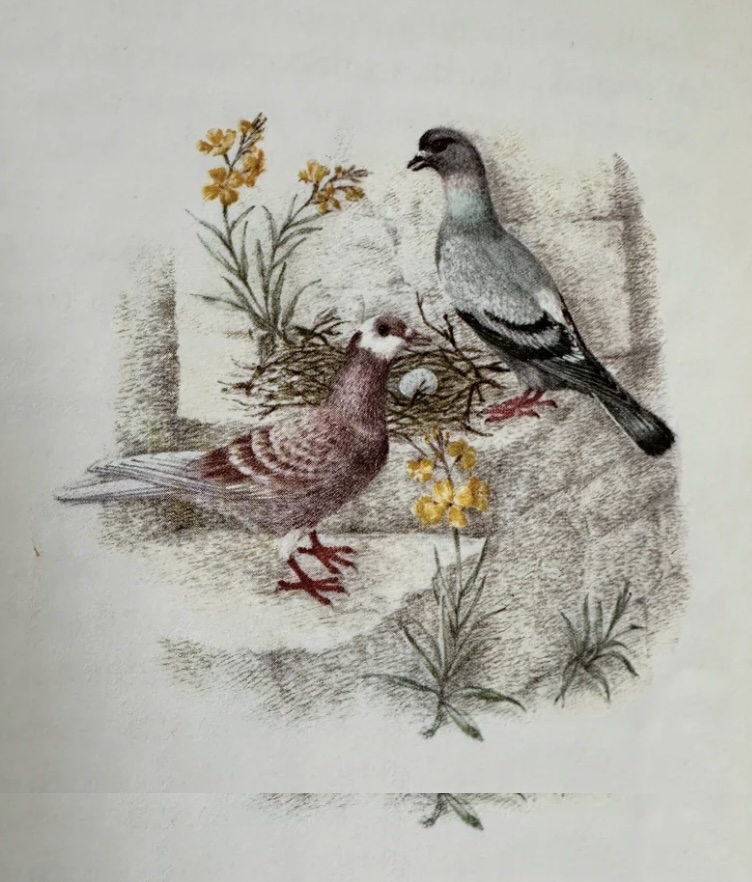
The story follows Mr. Tidler and his wife, Amabella, a pair of pigeons whose peaceful life is broken by the arrival of a peregrine falcon. In the desperate panic to escape, Amabella falls down an abandoned, pitch-black chimney on Robin Hill. She is trapped in the cold stone, and in a detail that brings the reality of nature home, we find she is about to become a mother in the dark.
What happens next is the heartbeat of the book. Mr. Tidler doesn’t give up. For weeks, he conducts a rescue mission of pure persistence, dropping grains of corn down into the dark to keep her alive. With the help of a pragmatic mouse who lives among the foundations, the pair eventually emerges back into the sun.
The Faith of the High Roofs
The words here feel different from her woods and garden stories. You can almost smell the sea air and feel the cold stone of the old town. It is a story that moves with a quiet, steadying weight—a reminder that even in the darkest "chimney" of a difficult day, there is a persistence that eventually leads us back into the sun.
📂 The Archivist’s Drawer
Hidden details for the collector and the historian.
- The Private 100: In 1955, the first trade edition was finally printed, but it was anything but "trade." Only 100 copies were produced, originally intended as private gifts for the friends of Frederick Warne & Co.
- The "Namby Pamby" Critique: Beatrix's refusal to publish during her lifetime was rooted in her self-criticism. She felt she couldn't draw birds with the same "bone-deep" accuracy she applied to rabbits and mice.
- The Warne Connection: The manuscript was a vital link to the Warne family, serving as a "menagerie of ghosts" that kept the memory of her fiancé alive through his children's bookshelves.
- The Sussex Sketches: The chimneys and rooftops in the book are direct transcriptions of the architecture of Rye, proving that even in her most personal fiction, her eye remained that of a scientific observer.
- The Mouse’s Role: The mouse who helps Mr. Tidler is a classic Potter touch—a pragmatic, working-class creature who provides the technical solution to a high-drama problem.
Finding the Edition
- The Best Reading Copy: Seek out the version illustrated by Marie Angel. As a specialist in miniature art, she brought a "jewel-toned" palette to the book that finally matched the vision Beatrix had tucked away in 1907.
- A Collector’s Prize: If you ever find a copy with the 1955 date, you are holding a piece of publishing history—a rare survivor of a very small, private run.
Let the cooing of the faithful dove bring a little bit of the Sussex seaside to your library tonight.
Leave a Visiting Card
Consulting the visiting cards...