
The Tale of Johnny Town-Mouse is Beatrix Potter's version of one of the oldest stories there is. The fable of the town mouse and the country mouse goes back to Aesop. Each mouse visits the other's home; each finds it unbearable; each is glad to return to his own. Beatrix took that ancient shape and set it down in her own Lake District, between two real villages she knew well.
She published it in 1918, late in her career, when book-making had become hard for her. It is a quiet, tired, tender book. It is also, by her biographer's account, the most personal thing she ever wrote — because the country mouse who cannot bear the town was, in a real sense, Beatrix herself.
An Old Fable in a Real Place
Beatrix did not invent the plot. She borrowed it from Aesop, openly. She even dedicated the book "To Aesop in the shadows" — a small bow to the ancient storyteller whose fable she was retelling.
What she added was place. She set the story between Sawrey, where her own farm was, and Hawkshead, the market town about two and a half miles away across Esthwaite Water. The country mouse, Timmy Willie, has his home in a Sawrey garden. The town mouse, Johnny Town-Mouse, lives under the floorboards of a house in Hawkshead. The whole fable plays out across a stretch of countryside Beatrix walked and farmed every day.
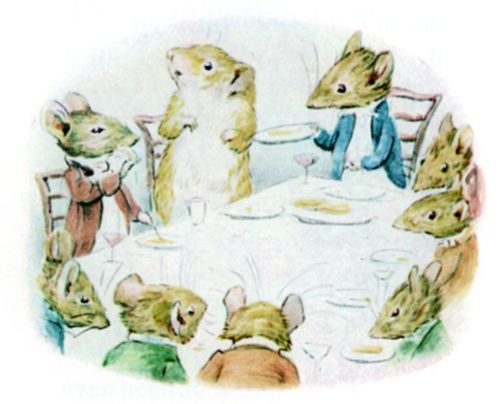
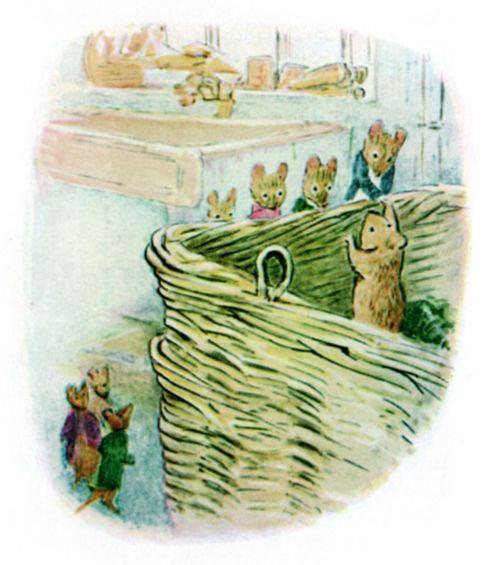
The story begins with an accident. Timmy Willie falls asleep in a hamper of vegetables being sent from the country to the town, and wakes up in the middle of Johnny Town-Mouse's dinner party — a table full of city mice "with long tails and white neckties." He is terrified by the house cat and made ill by the rich town food. At the first chance he climbs back into the hamper and goes home.
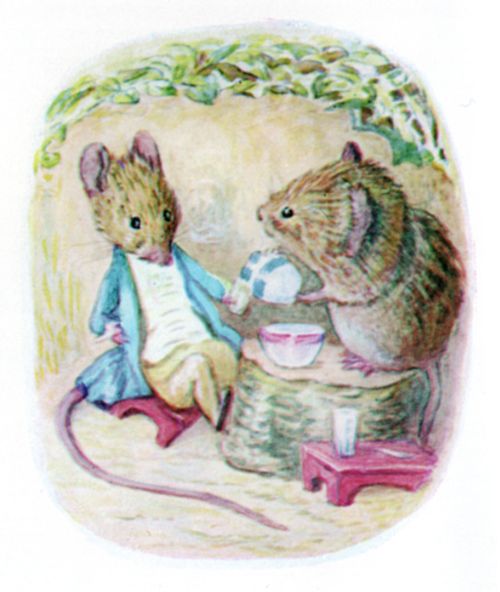
The following spring Johnny returns the visit. But he cannot stand the country either. The herb pudding does not suit him, the farm noises frighten him, and the deep quiet unsettles him. He climbs into the next hamper and rides home to the town. Each mouse, in the end, belongs where he started.
The Real Town, the Real People
As always, Beatrix built the book from real things. The town house with its tall staircase belonged to a Mrs Bolton of Hawkshead, who really did receive vegetables from Sawrey each week and send laundry back the other way — the very traffic that carries Timmy Willie to town in the story.
Johnny Town-Mouse himself was drawn from a real man. He was drawn as a likeness of Dr Parsons, who golfed with her husband William Heelis. Beatrix said so without hesitation. The long bag that Johnny carries, she explained, "contained golf clubs, and Dr. Parsons and Mr. Heelis used to play together." Asked whether she would recognise Dr Parsons in the book, she answered: "Of course, the identical figure." The two men even had a small private golf course at Sawrey.
Other real things crowd the pictures. The cook who packs the hamper was drawn from Mrs Rogerson, who had worked for the Potter family. The carrier's horse was "Old Diamond," one of her own farm horses, drawn from life — the carrier's cart was her favourite illustration in the book. An archway in Hawkshead can still be recognised today. And as Timmy Willie comes home, the weather-vane of the village shop she had drawn in an earlier book can be glimpsed in the background. The book is stitched, like all her best work, out of the world right outside her door.
Whose Tale Is It?
The book went through several names before it settled, and the changes are telling. Beatrix first thought of it as Timmy Willie's story — the country mouse's tale. Then it became "A Tale of a Country Mouse." Only at the end did she give the title to the town mouse instead: The Tale of Johnny Town-Mouse.
The switch forced her to rewrite the opening so that both mice were introduced fairly. The book now begins by balancing them, one against the other: "Johnny Town-mouse was born in a cupboard. Timmy Willie was born in a garden. He was a little country mouse; he went to town by mistake in a hamper." Two creatures, two birthplaces, two whole ways of living, set side by side in three short sentences.
→ Read The Tale of Johnny Town-Mouse
She built the book economically, as a tired and busy woman would. To lay out the pages she made a dummy from an old copy of one of her earlier tales, pasting the new drawings over the old. Her publisher even measured the text against that earlier book to check the length — the two came out within a couple of words of each other. After all her doubts about her failing eyes, the finished thing was warmly received. The Bookman called it "another volume for the Peter Rabbit bookshelf," with "such charming pictures and exciting letterpress," and added that "Miss Potter need not worry about rivals. She has none."
The Country Mouse Was Beatrix
This is where the book becomes more than a retelling. Linda Lear calls it "the most autobiographical of Potter's little books," and the reason is plain once you know Beatrix's own life.
She had made exactly this journey, in reverse and for keeps. She had grown up in town, in London, and she had left it for the country and never wished to go back. The fable of a creature who is happy only in the quiet of the fields, who finds the town frightening and false, fit her own choice perfectly. Lear calls the story "very nearly biographical."
Beatrix put the moral in her own words at the close, and it reads like a personal statement: "One place suits one person, another place suits another person. For my part I prefer to live in the country, like Timmy Willie." That last clause settles it. She is not just retelling Aesop. She is telling the reader where she herself stands — with the country mouse, in the quiet, by choice.
A Book Made Against the Odds
Johnny Town-Mouse was hard to make, and Beatrix nearly did not manage it. By 1918 her eyesight was failing and her hands were stiffening, and the close work of colouring small drawings had become a struggle.
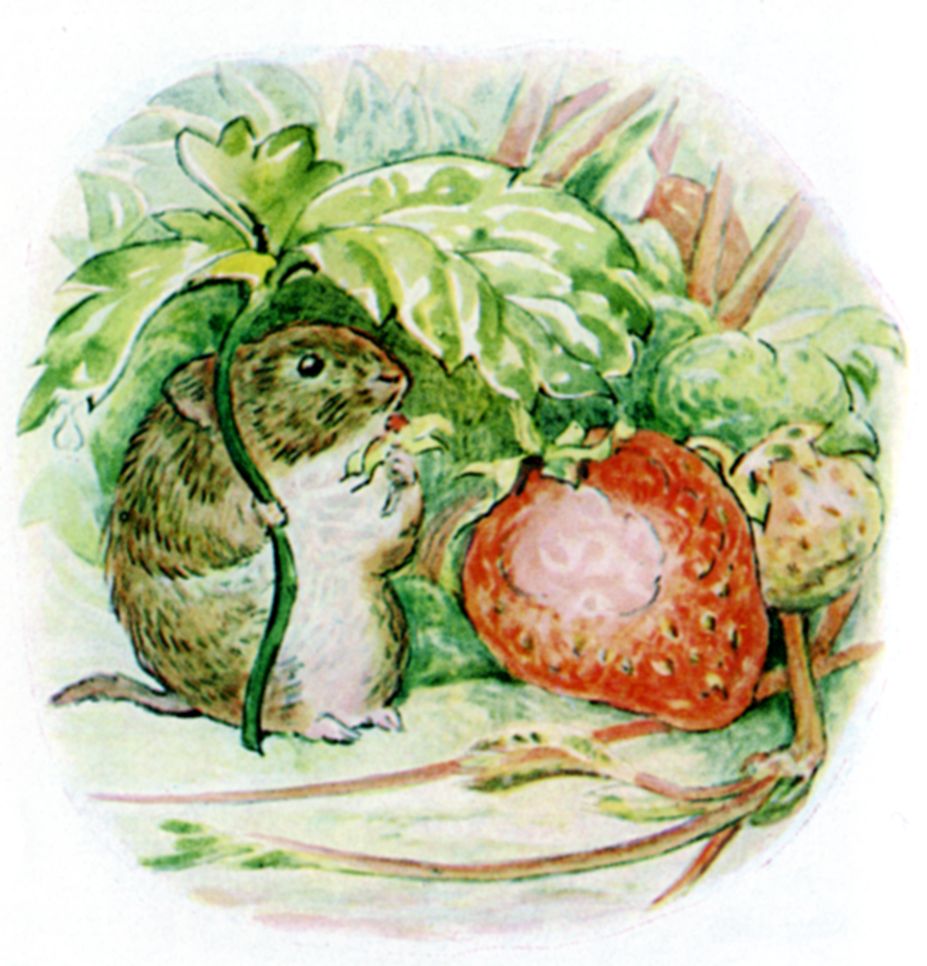
Her letters from the time are full of it. "My feeling was that my eyes were failing and my hands getting stiff," she wrote, though she added that she "had still brains and ideas." Sending in some drawings, she confessed: "I simply cannot see to put colour in them... It would have made a good book... with sight and cheerfulness to do it." Of the whole effort she said simply: "I had an awful scramble to do this little book."
She was also, by now, far more a farmer than an author, and she half resented being pulled back to the drawing table. "Somehow when one is up to the eyes in work with real live animals," she wrote, "it makes one despise paper-book animals — but I mustn't say that to my publisher!"
There was real grief behind it too. She made the book in the same months that her brother Bertram died suddenly, in June 1918. And she took it on partly to help — the publishing firm was still struggling after its near-collapse the year before, and Fruing Warne persuaded her to produce two new books to bring in money. She worked on the drawings in snatched hours — between sowing turnips, battling the turnip fly, and the first of the lambing.
It was her last book made from entirely new colour drawings. After this, her eyes would not allow many more. So Johnny Town-Mouse stands near the end of her real working life as an illustrator — a tired, late, beautiful retelling of the oldest fable, in which the country mouse goes home for good, exactly as she had.
Read It in Full
That's how it was made. Now read The Tale of Johnny Town-Mouse itself, in the Complete Tales. Open The Tale of Johnny Town-Mouse →
Sources
The facts in this article are drawn chiefly from Leslie Linder, A History of the Writings of Beatrix Potter, and Linda Lear, Beatrix Potter: A Life in Nature, cross-checked against Judy Taylor's edition of Beatrix Potter's Letters to Children. The autobiographical reading is Lear's; the closing moral and the remarks about her failing sight are Beatrix Potter's own words, as recorded by Linder and Lear. The history is theirs to record; the words here are our own.
Leave a Visiting Card
Consulting the visiting cards...