No other book in Beatrix Potter's canon uses a single building as thoroughly as The Tale of Tom Kitten uses Hill Top. Published in 1907, the book is a love letter to the farmhouse she had bought two years earlier — its stone floors, its oak panelling, its particular gates, its view down Stoney Lane. The kittens' mischief is the plot. The house and garden are the point.
Brathay Slate and Oak Panelling
Hill Top is an old house. When Beatrix bought it in 1905, she found a building with thick walls, low ceilings, dark oak panelling, and the kind of heavy domestic furniture that had been in farmhouses of that region for generations.
She fell for it immediately. And she drew it closely.
The interior scenes in Tom Kitten are documentary in their accuracy. The floors are Brathay slate — the grey-green stone quarried locally, used in Lakeland farmhouses for centuries. The panelling is the specific dark oak that Beatrix found in the house and chose to keep, rather than strip out. The staircase, the kitchen, the rooms where the kittens dress for their mother's visitors — these are the actual rooms of Hill Top, reproduced with the care of someone who loved them.
Beatrix later wrote that the book was a record of the house as it was when she first moved in. She was alert to what might change and what might be lost, and she used the book to fix things in place.
The Garden: Gate, Lane, and View
The outside scenes are equally specific.
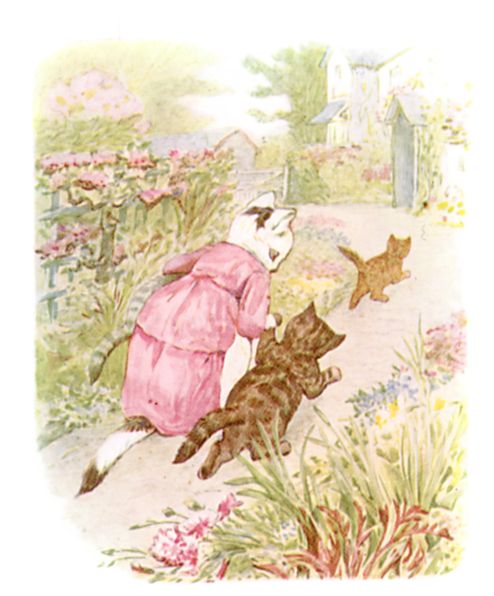
The white wicket gate at the front of Hill Top's garden is one of the book's central props. Tom Kitten climbs it. The kittens' clothes fall from it. The gate is exactly the gate Beatrix had put in at the front of the garden — a small, characteristic detail of the property that she turned into a plot device.
Stoney Lane runs along the side of the property. The view from the lane appears in several illustrations — the dry-stone walls, the fields beyond, the shape of the fells. Smithy Lane is also visible in the background of some scenes.
The white gate and the Smithy Lane gate appeared in other Hill Top books as well, especially The Tale of Samuel Whiskers, which was written at the same time. But in Tom Kitten they are most central. The kittens lose their clothes in the garden before their mother's guests arrive, and the garden through which they run — the specific paths, the walls, the particular angle of the view — are Hill Top as Beatrix found it and wanted to remember it.
"All" or "Nearly All"
Beatrix had a dispute with Frederick Warne over a single word in the text.
The passage in question described the state of affairs after the kittens had lost their clothes. Beatrix had written that the ducks put on "all" the clothes. Warne's editors thought "nearly all" was more accurate — after all, only some of the clothes would fit the ducks' bodies.
Beatrix disagreed. She felt the word "all" was funnier and truer to the spirit of a children's story. The question of exactly how much clothing three ducks could realistically wear was not, she thought, the point.
It was the kind of disagreement she was capable of holding firmly. She was not always easy with editorial suggestions, particularly when she felt they missed the tone she was working in. The dispute over this single word reflects how precisely she had calculated every element of the book's register — and how little she was willing to yield on details she considered right.
The resolution of this particular argument is not recorded with complete clarity by Linder, who noted both versions existed in the making of the book. The text as published reads "nearly all." Whether this was her final word or Warne's is uncertain.
The Ducks
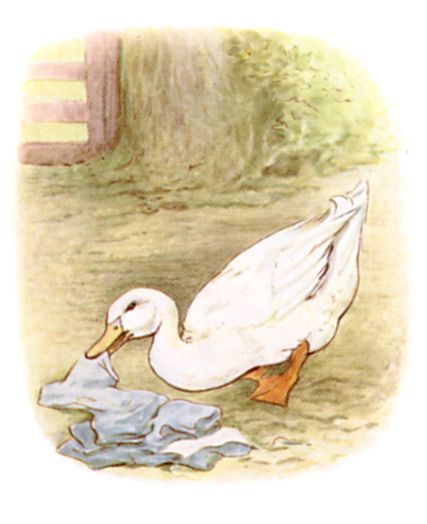
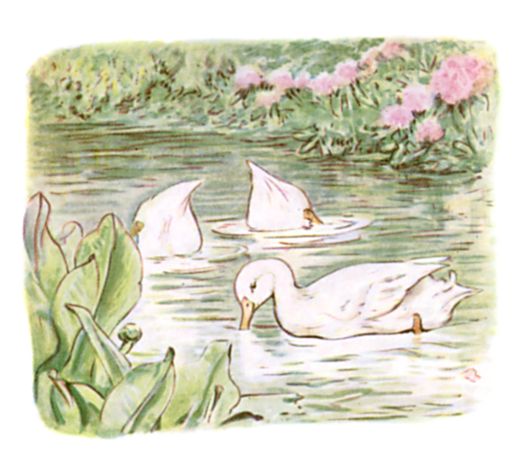
The puddle-ducks who take the kittens' clothes are not simply comic relief. They are drawn with the same observational care that Beatrix brought to all her animal illustrations.
She had ducks at Hill Top. She had watched them at close range. The waddling walk, the way they hold their heads, the manner in which they would inspect an object on the ground before deciding what to do with it — all of this is present in the illustrations. The ducks are funny because Beatrix drew them accurately, and accurate ducks wearing children's clothes are genuinely funny.
She later wrote that the ducks "help it out" — meaning that without them the story's ending would have less energy. The kittens make mischief, but it is the ducks who transform the mischief into something comic rather than simply naughty. The kittens are embarrassed. The ducks are delighted.
Beatrix in the Picture
Beatrix drew herself into the Hill Top books more than once. In Tom Kitten she appears as a figure in the background — identifiable to anyone who knew her, standing at the end of Smithy Lane.
This habit of quiet self-insertion was characteristic. She did not announce herself. She placed herself where she actually stood, in the lane beside the farmhouse, and let readers who knew the setting recognise her.
It was a private joke and also a true record. She was there. The house behind her was her house. The lane was her lane. The book was, among other things, a document of belonging — a woman who had spent her whole life in rented rooms and holidays, now standing outside her own farmhouse, in her own lane, in the background of her own book.
The Kittens' Clothes
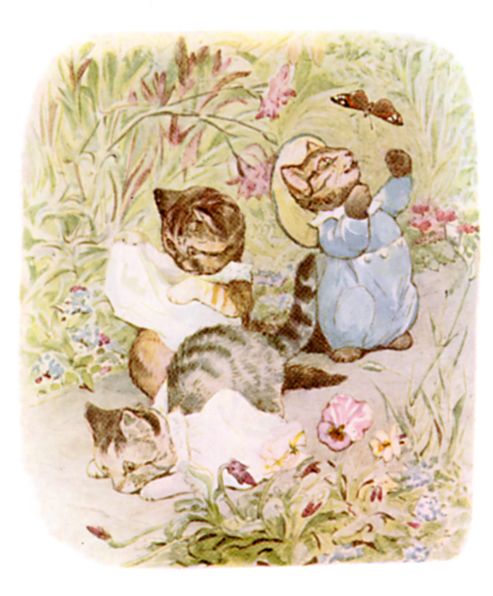
The story turns on the kittens' clothes — the uncomfortable formal garments that Tabitha Twitchit puts on her three children before her fine company arrives.
This is a very Beatrix Potter premise. The small animals in her books are frequently burdened by clothes they cannot manage. Peter loses his jacket and shoes. Tom, Mittens, and Moppet lose their entire outfits. The clothes represent the adult world's demands — propriety, presentation, the need to be seen as respectable — and the animals invariably shed them.
In Tom Kitten's case the shedding is involuntary. The kittens are too fat. The buttons will not stay fastened. The clothes end up on the puddle-ducks because the puddle-ducks find them and put them on.
Beatrix drew Tom bursting out of his outfit with a combination of sympathy and comedy. She had, as a child, been dressed in ways she found uncomfortable and been expected to present herself correctly for company she did not particularly want to meet. Tom Kitten is not a self-portrait in any direct sense. But the comedy of the well-dressed small animal who cannot keep his clothes on had personal roots.
A Double Book
The Tale of Tom Kitten and The Tale of Samuel Whiskers were written at the same time and published the same year. Both are set at Hill Top. Both use the house as a character. But they operate in different registers.
Tom Kitten is a light, warm, domestic comedy about kittens who will not stay clean. Samuel Whiskers is a darker, longer book about rats in the walls and a kitten in genuine danger. Together they form a pair of responses to the same house — the same rooms, the same gates, the same view from the garden — seen first in play and then in something closer to fear.
Beatrix seems to have needed to write both versions of Hill Top to capture what it meant to her. The warm comic version came in Tom Kitten. The stranger, more complicated response came in the rat story. Both were dedicated to the farmhouse that had changed her life.
Tom Kitten's dedication read "to all Pickles." It was a phrase that meant something private to Beatrix — affectionate, slightly absurd, entirely her own.
Read It in Full
That's how it was made. Now read The Tale of Tom Kitten itself, in the Complete Tales. Open The Tale of Tom Kitten →
Sources
The facts in this article are drawn chiefly from Leslie Linder, A History of the Writings of Beatrix Potter, Linda Lear, Beatrix Potter: A Life in Nature, and Linda Lear's notes on the Hill Top rooms as recorded in the published correspondence. The history is theirs to record; the words here are our own.
Leave a Visiting Card
Consulting the visiting cards...